Month-by-Month Baby Development: The Enchanting Journey of the Second Year - From First Words to Independent Steps.
Your baby's second year is a period of growing independence, communication and physical development. From taking early steps and learning new words to imaginative play and everyday routines, the months between 13 and 24 can bring significant changes. Understanding baby development month by month helps parents recognise emerging skills and respond to their child's changing needs.
This guide explores development from 13 to 24 months, including physical, cognitive, social, emotional and language milestones. Every child develops at their own pace, so milestones should be treated as general guides rather than fixed deadlines. For the earlier stages, explore our baby development from birth to 12 months guide.
How Does Baby Development Progress from 13 to 24 Months?
During the second year, toddlers become increasingly interested in exploring their surroundings independently. Walking and balance improve, while problem-solving, imitation and the ability to use everyday objects continue developing. Communication also progresses through gestures, meaningful words and, eventually, simple word combinations.
As independence grows, toddlers may become more determined to do things themselves. However, emotional regulation is still developing, and frustration can be common. Patient, consistent and responsive care helps children explore new skills in a safe and supportive environment.
13-Month-Old Baby Development: First Steps and Exploration
At 13 months, babies continue developing their movement skills. Some begin walking independently, while others prefer moving along furniture for support. Grasping objects, placing toys into containers and examining everyday items are important parts of learning through exploration.
Communication may involve pointing, waving and using meaningful sounds or early words. Babies can become increasingly responsive to familiar language and routines. Learn more about these changes in our 13-month-old baby development guide.
14-Month-Old Baby Development: Growing Independence
At 14 months, toddlers may explore their surroundings more actively as their mobility improves. Some become steadier on their feet, while others continue practising supported walking. Carrying objects, placing toys into boxes and copying simple everyday actions may become favourite activities.
Attempts at self-feeding may also increase. Toddlers might enjoy picking up finger foods or experimenting with a spoon. Offering safe opportunities to practise these skills encourages independence. Discover more in our 14-month-old baby development guide.
15-Month-Old Baby Development: Imitation and Communication
By 15 months, many toddlers can take a few independent steps, begin using familiar objects appropriately and imitate simple everyday actions. Pretending to use a telephone or attempting to stack objects may reflect growing cognitive and motor skills.
Communication may include pointing to request help, showing familiar objects and attempting one or two words besides 'mama' or 'dada'. Talking together and sharing picture books encourage language development. Explore these milestones in our 15-month-old baby development guide.
16-Month-Old Baby Development: Movement and Learning
At 16 months, toddlers may become more confident in their movements. Children who are already walking might practise changing direction, bending down and standing again or carrying toys while moving. Combining objects and exploring simple cause-and-effect relationships may also capture their attention.
Language comprehension often develops ahead of spoken vocabulary. Toddlers may recognise familiar people and objects and use gestures to communicate their needs. Describing everyday activities in simple language supports learning. Read more in our 16-month-old baby development guide.
17-Month-Old Baby Development: Emotions and Social Interaction
At 17 months, toddlers may express their feelings and preferences more clearly. Happiness, frustration and disappointment can become increasingly noticeable as children develop a stronger desire for independence while still learning how to manage their emotions.
Imitating adults, joining simple games and recognising familiar routines may become important parts of daily life. Naming emotions and responding calmly can support social and emotional development. Learn more in our 17-month-old baby development guide.
18-Month-Old Baby Development: Walking and Early Language
By 18 months, most toddlers can walk without support. Some begin climbing onto furniture, pulling toys along or experimenting with a spoon. Their growing mobility often encourages a stronger interest in exploring and participating in everyday activities.
Important communication milestones include attempting several words besides 'mama' and 'dada', following simple one-step instructions without gestures and pointing to show something interesting. Some children begin combining words at this age, although two-word phrases generally become more established later in the second year. Explore these developments in our 18-month-old baby development guide.
19-Month-Old Baby Development: Curiosity and Problem-Solving
At 19 months, toddlers may become increasingly interested in understanding how objects work. Opening and closing containers, combining toys and experimenting with cause-and-effect activities provide opportunities to develop problem-solving skills.
Looking at picture books, identifying familiar objects and attempting to repeat words heard during everyday conversations can also become enjoyable activities. Allowing children time to explore independently supports confidence and learning. Find out more in our 19-month-old baby development guide.
20-Month-Old Baby Development: Play and Learning
At 20 months, toddlers may begin incorporating familiar everyday experiences into their play. Pretending to feed a doll, talking on a toy telephone or using objects to represent other things can reflect the development of symbolic and imaginative play.
As physical coordination improves, toddlers may practise carrying objects while walking, bending down and maintaining balance on different surfaces. Simple matching activities and picture books encourage cognitive development. Explore this stage in our 20-month-old baby development guide.
21-Month-Old Baby Development: Words and Expressing Needs
At 21 months, communication skills may become increasingly noticeable. Learning new words, attempting to name familiar objects and expressing preferences through gestures or speech are important parts of everyday interaction. However, spoken vocabulary can vary considerably between children.
As independence develops, toddlers may want to choose their clothes or participate in simple daily tasks. Offering manageable choices and allowing time for communication can support confidence and language development. Discover more in our 21-month-old baby development guide.
22-Month-Old Baby Development: Imitation and Everyday Skills
At 22 months, toddlers may increasingly imitate adult activities during play. Pretending to prepare food, putting a doll to bed or copying household routines can demonstrate developing imagination and social understanding.
Children may also become more interested in helping with everyday activities. Assisting with handwashing, attempting to remove clothing and putting toys away are examples of emerging self-care skills. Read more in our 22-month-old baby development guide.
23-Month-Old Baby Development: Social Skills and Play
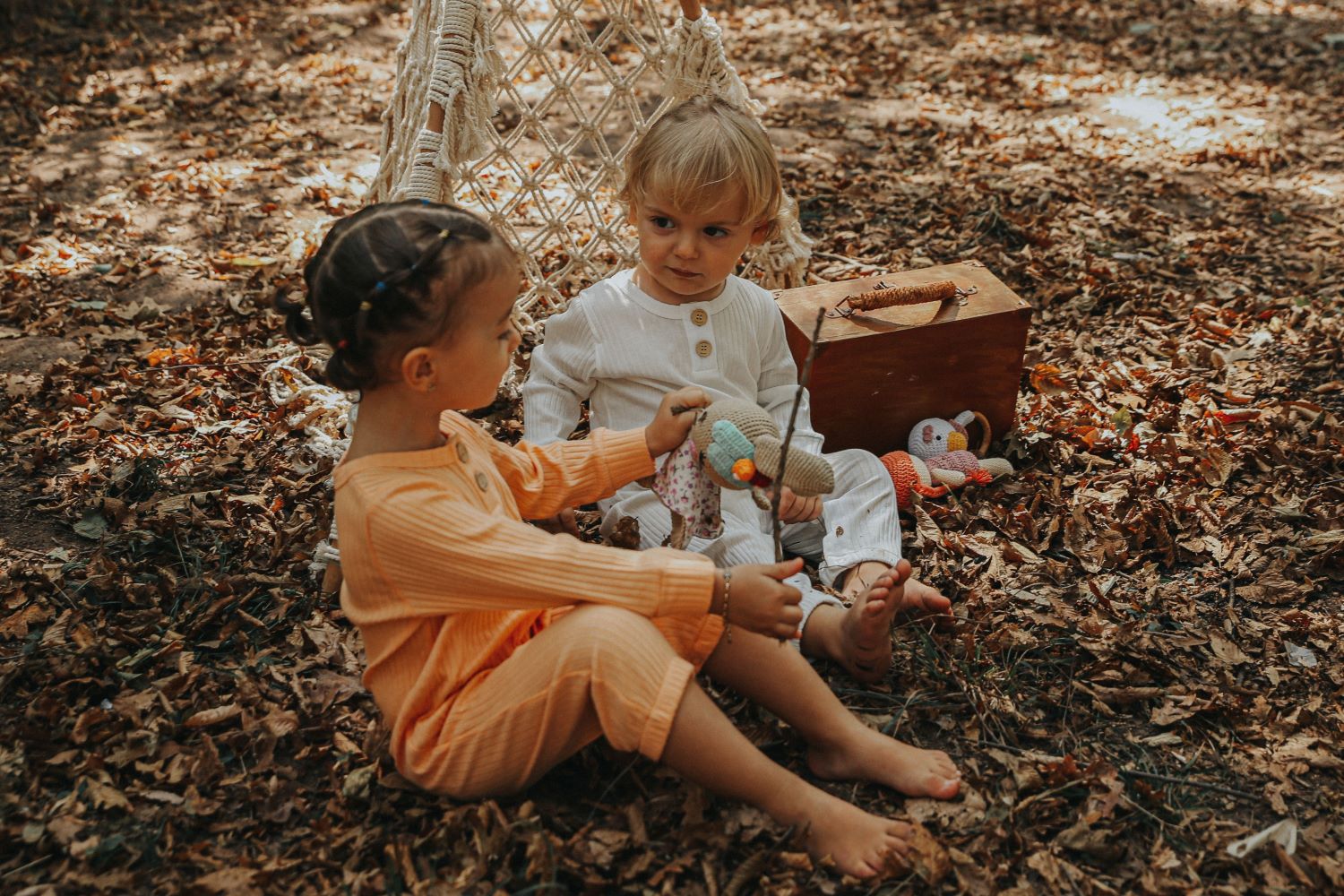
At 23 months, toddlers may show increasing interest in other children. Playing alongside peers, copying their actions and exploring similar toys are natural parts of social development. Sharing and taking turns, however, are still emerging skills and usually require adult guidance.
As language and play skills progress, toddlers may communicate their wishes more clearly. Reading short stories, enjoying imaginative games and talking about everyday experiences support learning. Explore these developments in our 23-month-old baby development guide.
24-Month-Old Baby Development: Important Two-Year Milestones
By their second birthday, many toddlers can run, kick a ball, walk up a few stairs with assistance and use a spoon. Greater independence in everyday movements reflects developing balance and coordination, although individual abilities continue to vary.
Communication milestones often include combining at least two words, pointing to familiar objects in books when asked and using more than one toy together during play. Some children may begin showing signs of readiness for toilet training, but independent toilet use is not an expected requirement at two years. Learn more in our 24-month-old baby development guide.
How Can Parents Support Development from 13 to 24 Months?
Everyday activities provide valuable opportunities for learning throughout the second year. Reading together, singing songs, naming familiar objects and engaging in interactive play can support language and cognitive development.
Providing safe spaces for movement, offering age-appropriate toys and encouraging toddlers to try simple tasks independently can strengthen motor skills and confidence. Consistent sleep routines, balanced nutrition and responsive care also contribute to healthy development.
When Should You Seek Advice About Toddler Development?
Although developmental progress varies, concerns about delayed milestones should be discussed with a healthcare professional. Not walking independently by around 18 months, significant communication difficulties or limited interest in social interaction may warrant further assessment.
By two years, not combining two words, having substantial difficulty understanding simple instructions or losing previously acquired skills are reasons to seek professional advice. Parents in the UK can speak to their health visitor or GP if they have concerns about their child's development.
Frequently Asked Questions About Toddler Development
At what age do babies start walking?
Independent walking often begins around the first birthday, but there is considerable variation. If a child is not walking independently by 18 months, parents should discuss this with a healthcare professional.
How many words should an 18-month-old say?
By 18 months, many toddlers attempt at least a few meaningful words besides 'mama' and 'dada'. Spoken vocabulary varies, and language development should be considered alongside gestures, comprehension and social communication.
Can a two-year-old put words together?
By around two years, many children begin combining at least two words into short phrases. Expressions such as 'more milk' are examples of early word combinations.
Should a two-year-old be toilet trained?
No. Readiness for toilet training varies between children. Physical control, communication skills and interest in using the toilet should all be considered. Independent toilet use is not a requirement at two years.
How can parents encourage development between 13 and 24 months?
Talking together, sharing books, providing safe opportunities for movement and involving toddlers in simple daily routines can support development. Play remains one of the most important ways children learn during this period.
From the First Year to the Second: Understanding Baby Development
Skills developed during the first year, including head control, sitting, grasping objects and early communication, provide a foundation for greater independence during the second year. To explore these earlier milestones, read our baby development from birth to 12 months guide.
This article is intended for general information only and does not replace professional medical advice or individual developmental assessment.
Share